
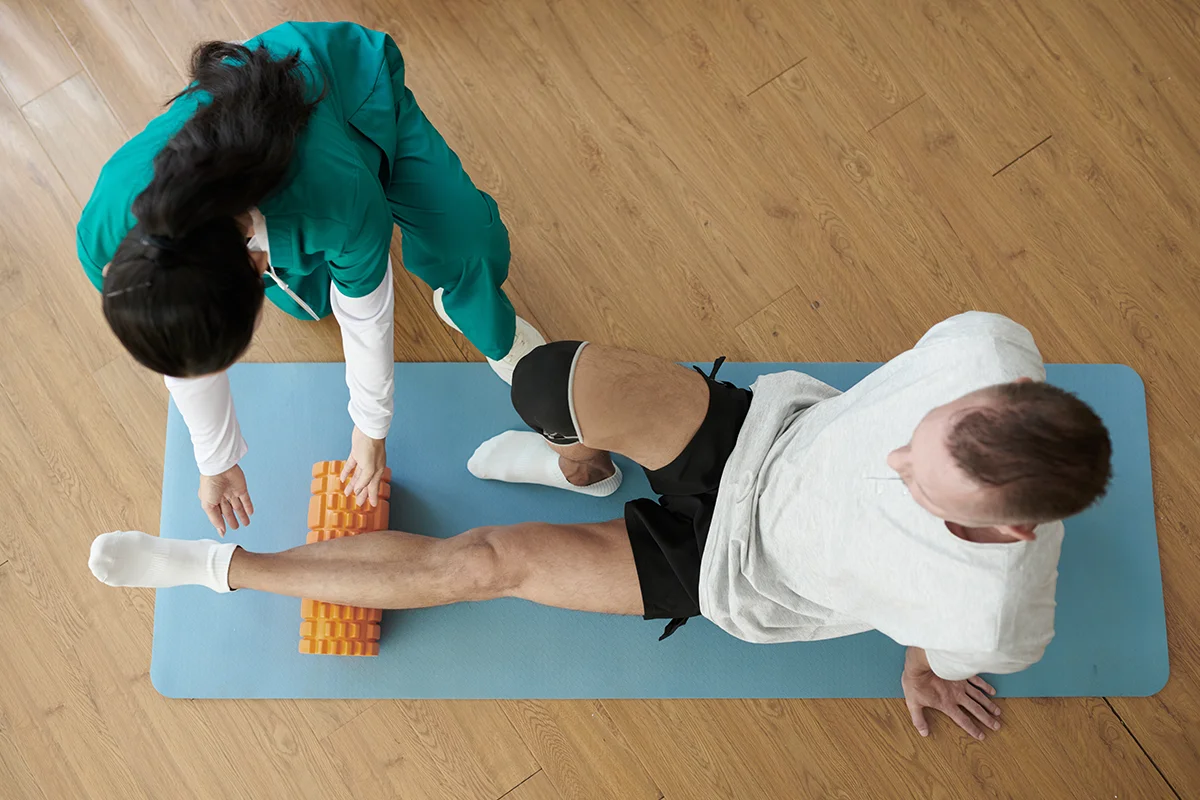
Patients searching for who is the best sports medicine doctor in Boise often look for specialized fellowship training, advanced arthroscopic expertise, and a proven track record in joint restoration. Finding the right specialist ensures an accurate diagnosis and a customized recovery plan tailored to your active lifestyle.
But there is an important point worth making before we go any further.
There is no single sports medicine doctor who is automatically the “best” for every patient and every injury.
The best fit for an Achilles rupture may be very different from the best fit for an ACL tear. A competitive runner with persistent ankle pain needs a different area of expertise from a swimmer with a rotator cuff problem or a teenager whose knee keeps giving way.
At Catalyst Orthopaedics & Sports Medicine in Boise, that distinction shapes how patients are matched with care.
Dr. Kaitlin Neary is a board-certified orthopaedic surgeon with fellowship training in foot and ankle surgery and particular expertise in sports-related foot and ankle injuries, cartilage preservation, minimally invasive surgery, ankle reconstruction and accelerated rehabilitation.
Dr. Tracye Lawyer is a board-certified, fellowship-trained orthopaedic sports medicine surgeon whose clinical focus includes the shoulder, elbow and knee, with expertise in ACL reconstruction, meniscus preservation, cartilage restoration and shoulder surgery.
So a better question than “Who has the best name on Google?” is:
Who has the right training and experience for the problem I actually have?
That is where choosing a sports medicine specialist should begin.
What to Look for in Boise’s Top Orthopaedic and Sports Specialists
When patients ask who is the best sports medicine doctor in Boise, credentials matter, but credentials alone do not tell the whole story.
A strong orthopaedic specialist should combine formal training with experience treating the particular joint, injury or activity that matters to you.
Board certification
Board certification is one of the first things worth checking.
In orthopaedic surgery, certification through the American Board of Orthopaedic Surgery demonstrates that a surgeon has completed accredited training, passed written and oral examinations, undergone peer review and met ongoing professional requirements.
It is not the same thing as simply holding a medical license.
Certification provides a useful baseline.
It tells you the surgeon has completed a recognised process designed specifically to assess orthopaedic knowledge, judgement and professional standards.
Both Dr. Neary and Dr. Lawyer are ABOS board-certified orthopaedic surgeons.
Fellowship training
After orthopaedic residency, some surgeons choose additional specialist training in a particular area.
That is a fellowship.
Dr. Neary completed a dedicated foot and ankle fellowship after her orthopaedic surgery residency. Her practice therefore goes far beyond general orthopaedics and includes complex sports injuries, ankle instability, Achilles injuries, cartilage restoration, minimally invasive foot and ankle surgery, ankle replacement and reconstructive surgery.
Dr. Lawyer completed fellowship training in sports medicine. Her work focuses particularly on the knee, shoulder and elbow, including sports injuries, cartilage preservation, ligament reconstruction and joint restoration.
This is why the joint itself matters when choosing your doctor.
A foot and ankle surgeon may understand the nuances of a syndesmosis injury or chronic ankle instability in a way that someone who rarely treats these conditions simply cannot.
Likewise, complex ACL and meniscus surgery belongs naturally with a surgeon whose practice regularly centres on the knee.
The surgeon should understand what you are trying to get back to
The diagnosis is only half of sports medicine.
The other half is knowing what the patient wants the joint to do again.
“Feeling better” could mean very different things.
A 20-year-old soccer player wants to cut, accelerate and absorb contact.
A 45-year-old mountain biker wants to climb and descend confidently.
A 60-year-old pickleball player may simply want to play three times a week without an ankle swelling afterward.
That context should influence treatment.
Dr. Neary was a Division I soccer player and later played professionally. She remains an active competitive cyclist.
Dr. Lawyer competed at Stanford in both soccer and track and field and went on to compete in the U.S. Olympic Trials.
Neither background replaces surgical training.
What it can add is an instinctive understanding that returning to activity means more than being able to walk across the examination room without pain.

How to tell if an orthopaedic surgeon is good?
Look for board certification, specialist training that matches your condition, clear communication, appropriate use of non-surgical treatment and a willingness to explain why surgery is or is not needed.
A good surgeon should be able to tell you what they think is wrong, how confident they are in the diagnosis and what your reasonable options are.
You should also understand why a particular treatment is being recommended.
That sounds obvious.
It does not always happen.
Check their credentials
You can independently verify whether an orthopaedic surgeon is board-certified.
Do not rely entirely on marketing phrases such as “leading,” “top,” “specialist” or “expert.”
Those words can be useful shorthand, but recognised training and certification are easier to verify.
Look at the surgeon’s actual subspecialty
Orthopaedics is a large field.
A surgeon can spend most of their career treating shoulders, feet, spines, hands, knees or joint replacements.
That experience matters.
If your problem is a chronic Achilles injury, you probably care more about the surgeon’s foot and ankle experience than how many shoulder replacements they perform.
If you have a complex meniscus tear, you want somebody who thinks regularly about meniscus preservation and cartilage health.
Choosing by subspecialty is usually more useful than choosing by popularity.
Notice whether conservative treatment is part of the conversation
Seeing a surgeon should not automatically result in a surgical plan.
At Catalyst, non-surgical treatment is an important part of orthopaedic care.
That might include physical therapy, bracing, activity modification, injections or simply giving an injury enough time to heal.
Dr. Neary’s approach to foot and ankle problems, for example, is to exhaust appropriate conservative options before recommending surgery when possible.
There are conditions where waiting is not sensible.
There are others where rehabilitation is exactly the right treatment.
A good consultation should help you understand which situation you are in.

Pay attention to how the doctor communicates
Did they listen before they started explaining?
Did they ask what activities matter to you?
Can you describe the treatment plan in your own words when you leave?
Do you understand the risks?
Do you know what happens if you choose not to have surgery?
Medicine gets complicated quickly. Good communication should make the decision clearer, not prove how many medical terms the surgeon knows.
If you leave with twelve new acronyms and no idea what happens next, something has gone slightly wrong.
Experience matters, but numbers need context
Patients often ask how many procedures a surgeon performs or what their complication rate is.
Those are reasonable questions.
Procedure volume can be useful, particularly with technically demanding or uncommon operations.
Complication rates are more complicated.
A surgeon who accepts difficult revision cases, severe deformities or injuries other surgeons have declined may naturally treat a more challenging patient population.
A simple percentage without understanding the cases behind it can therefore be misleading.
Better questions include:
- How often do you treat this condition?
- What procedure do you typically use and why?
- What are the important complications?
- What does your rehabilitation protocol look like?
- What happens if recovery does not go as planned?
- Do you perform revision surgery if the original procedure fails?
You are trying to understand the surgeon’s familiarity with your problem, not conduct a medical version of fantasy football.
What about patient reviews?
Patient reviews can be useful.
They may give you a feel for communication, office experience, scheduling and whether people felt heard.
But reviews have limits.
They are not a substitute for board certification, training or clinical outcomes.
A five-star review might tell you that somebody was kind and explained things well. That matters.
It cannot tell you whether the proposed surgical technique is the right one for your particular injury.
Use reviews as one piece of the picture.
Not the entire picture.
How do I choose a good orthopaedic surgeon?
Choose a surgeon whose subspecialty matches your condition, whose credentials are transparent, who explains both non-surgical and surgical options, and whose recovery plan reflects the activities you want to return to.
Start with the joint.
Where is the problem?
That immediately narrows the field.
At Catalyst, Dr. Neary’s principal specialist area is the foot and ankle.
Her practice includes sports-related foot and ankle injuries, Achilles disorders, ankle instability, cartilage restoration, minimally invasive surgery, ankle replacement and complex reconstruction.
Someone dealing with repeated ankle sprains, a difficult Achilles problem or an injury that refuses to settle after months of rehabilitation therefore has a clear reason to seek her particular expertise.
Patients can also learn more about Dr. Kaitlin Neary and her specialist foot and ankle work through her personal website.
For shoulder, elbow and knee problems, Dr. Lawyer brings a different set of specialist skills.
Her practice includes rotator cuff repair, shoulder instability, ACL reconstruction, meniscus repair and transplantation, patellar instability, cartilage restoration and multi-ligament knee surgery.
Her PhD work also focused on cartilage regeneration.
Patients who want to understand her specialist approach can explore Dr. Tracye Lawyer’s own site alongside Catalyst’s broader orthopaedic resources.
The two surgeons are not interchangeable.
That is a good thing.
Specialisation gives patients access to deeper expertise across different areas of the body while remaining within the same Catalyst team.
Sports medicine is not only for professional athletes
This misconception is surprisingly persistent.
You do not need a contract, a coach or a jersey with your surname on it to benefit from sports medicine.
Sports medicine is fundamentally about movement.
The principles used to return an athlete to sport also apply to somebody trying to return to hiking, golf, skiing, cycling, gym training or simply an active family life.
Boise gives people plenty of opportunities to test their joints.
One patient may arrive after a soccer injury.
The next twisted an ankle hiking.
Another has Achilles pain after taking up pickleball.
Someone else simply wants their shoulder to stop hurting every time they swim.
The activity changes.
The basic question remains: What does this person need their body to do?
Do I need a sports medicine doctor or a general orthopaedic surgeon?
It depends on the problem.
Many general orthopaedic surgeons provide excellent care across a broad range of musculoskeletal conditions.
A subspecialist becomes especially valuable when the injury is complex, sport-specific, recurrent or involves a procedure where detailed experience matters.
Consider specialist care when:
- An injury repeatedly returns
- The diagnosis remains unclear
- You have failed a reasonable course of rehabilitation
- A joint feels unstable
- You have a ligament or tendon rupture
- You have been told you may need surgery
- You are considering a complex reconstruction or joint-preservation procedure
- Previous surgery has not produced the expected result
- Returning to a demanding sport or occupation is particularly important
Catalyst also offers second opinions for patients who understand their diagnosis but are not yet comfortable with the treatment plan.
Seeking another opinion does not mean the first doctor was wrong.
Sometimes you simply need to hear the options explained differently before making an important decision.
Can I see an orthopaedic doctor without a referral?
Sometimes. Whether you need a referral usually depends on your health insurance plan rather than the orthopaedic condition itself.
Some PPO insurance plans allow patients to schedule directly with a specialist.
Many HMO or point-of-service plans require a referral from a primary care physician before specialist care will be covered.
Network rules matter too.
A doctor may be happy to see you directly while your insurance company still requires a referral or prior authorisation before it will pay its share.
Before scheduling, check:
- Whether Catalyst is in your network
- Whether your plan requires a specialist referral
- Whether imaging requires prior authorisation
- What your deductible or specialist copayment is
Catalyst accepts most insurance plans and also provides information for uninsured or self-pay patients.
The appointment team can help with practical questions, but your insurer remains the final authority on what your particular policy requires.
Can I go straight to an orthopaedic surgeon?
Yes, if your insurance allows direct specialist access, you can often schedule an orthopaedic evaluation without first seeing a primary care doctor.
There are situations where direct specialist care makes particular sense.
You may already know you tore an ACL.
You may have an ankle that keeps giving way after repeated sprains.
You may have an Achilles rupture.
Your knee may lock after a twisting injury.
Or another clinician may already have obtained imaging showing a structural problem.
In those situations, another general appointment may simply add an extra step.
There are also situations where primary care is an excellent starting point, particularly when symptoms are vague or could come from several different systems.
Insurance requirements and clinical necessity are two separate questions.
Do not confuse them.
What should the first sports medicine appointment feel like?
Ideally, less dramatic than patients expect.
The first job is not scheduling surgery.
It is solving the problem.
A good consultation usually starts with the story.
What happened?
When did it start?
Where does it hurt?
What makes it worse?
Has it swollen?
Does the joint feel unstable?
What treatment have you already tried?
What do you want to return to?
The examination then helps narrow the possibilities.
Imaging is ordered when it will answer a useful question.
Sometimes the diagnosis is clear without an MRI.
Sometimes imaging changes the entire plan.
The important point is that testing should support the clinical question rather than becoming the clinical question.
An MRI is extremely good at producing detailed pictures.
It is less good at telling your surgeon whether getting back to skiing matters more to you than running.
Why treatment philosophy matters
Imagine two patients with the same MRI.
Both have an ankle ligament injury.
One is a 19-year-old collegiate soccer player.
The other is a 58-year-old recreational cyclist.
Their scan may look similar.
Their treatment may not.
The athlete needs the ankle to tolerate sprinting, cutting, contact and rapid changes of direction.
The cyclist may need stability for walking, riding and everyday activity but never intends to run a cutting drill again.
Good orthopaedic care adapts to those differences.
This is one reason patient-centred treatment can sound like a marketing phrase until you actually need it.
Then it becomes quite practical.
Where Dr. Kaitlin Neary fits into sports medicine in Boise
Dr. Kaitlin Neary is a board-certified orthopaedic surgeon whose fellowship training and clinical practice focus on the foot and ankle.
She treats athletes at many levels, from recreational patients to high-level competitors.
Her specialist interests include sports-related foot and ankle injuries, chronic ankle instability, Achilles injuries, cartilage preservation, minimally invasive surgery, ankle replacement and complex reconstruction.
She also teaches orthopaedic surgeons and other foot and ankle professionals and has contributed to research and development within her subspecialty.
Her own background as a Division I and professional soccer player, along with competitive cycling, gives her a particularly relevant perspective on returning patients to activity.
That does not make her “the best doctor in Boise” for every musculoskeletal condition.
It makes her a particularly strong fit when the injury matches what she does every day.
That distinction is far more useful to patients than a generic ranking.
And where does Dr. Tracye Lawyer fit?
Dr. Lawyer brings complementary expertise to the Catalyst team.
She is a board-certified, fellowship-trained orthopaedic sports medicine surgeon specialising in the shoulder, elbow and knee.
Her work includes ACL reconstruction, meniscus repair and transplantation, cartilage restoration, patellar instability, rotator cuff repair, shoulder instability and shoulder replacement.
She also holds a PhD focused on cartilage regeneration and has extensive experience working with athletes.
Together, the two surgeons give Catalyst a broader specialist footprint than either could provide alone.
The patient’s injury determines where the expertise needs to come from.
So, who is the best sports medicine doctor in Boise?
The best sports medicine doctor in Boise for you is the specialist whose training, experience and treatment philosophy best match your injury, your goals and the level of activity you want to regain.
For some patients, that may be Dr. Neary.
For others, it may be Dr. Lawyer.
And sometimes the right next step is not surgery at all.
That is exactly why the first consultation matters.
You should leave knowing:
What is wrong.
What your options are.
What happens if you wait.
What recovery looks like.
And why the recommended plan makes sense for your life.
That is a much better measure of good sports medicine than a trophy nobody actually awards.
Questions worth asking your sports medicine doctor
Before making a treatment decision, consider asking:
- What do you think is causing my symptoms?
- Do I need additional imaging?
- What happens if we treat this without surgery?
- What would make surgery necessary?
- How often do you treat this particular problem?
- What are the main risks of the procedure?
- What will the first six weeks of recovery actually look like?
- When can I work, drive or exercise again?
- What determines when I can return to sport?
- If I am unsure, is getting a second opinion reasonable?
A confident clinician should be comfortable with those questions.
Finding sports medicine care at Catalyst Orthopaedics in Boise
Catalyst Orthopaedics & Sports Medicine serves patients across Boise and the Treasure Valley with care for shoulder, elbow, hip, knee, ankle and foot problems, along with fracture care, cartilage preservation, injections, minimally invasive surgery, revision surgery, pediatric orthopaedics and second opinions.
The point of having subspecialist surgeons within the same practice is not to make every patient fit one treatment model.
It is to get the right problem in front of the right person.
If you have a foot or ankle sports injury, Dr. Neary’s specialist background may be particularly relevant.
If your injury involves the knee, shoulder or elbow, Dr. Lawyer’s sports medicine expertise may provide the better fit.
And when the diagnosis crosses those neat boundaries, the advantage of a team becomes even clearer.
If you want an expert evaluation from the team at Catalyst Orthopaedics to address your joint pain, schedule your private consultation with our clinic today.
Dr. Kaitlin Neary is a fellowship-trained surgeon in Boise working alongside Dr. Tracye Lawyer to provide Idaho athletes with the most advanced sports medicine and orthopedic care available.

FAQs
Who is the best sports medicine doctor in Boise?
There is no single best sports medicine doctor for every condition. Look for board certification, subspecialty training that matches your injury, experience treating the condition, clear communication and a treatment plan built around your goals.
Is Dr. Kaitlin Neary a sports medicine doctor?
Dr. Kaitlin Neary is a board-certified orthopaedic surgeon and fellowship-trained foot and ankle specialist. Her practice includes sports-related foot and ankle injuries, Achilles disorders, ankle instability, cartilage restoration, minimally invasive surgery and return-to-activity care.
What type of injuries does Dr. Tracye Lawyer treat?
Dr. Lawyer is a board-certified, fellowship-trained orthopaedic sports medicine surgeon who focuses on shoulder, elbow and knee conditions. Her areas of expertise include ACL injuries, meniscus problems, cartilage restoration, shoulder instability and rotator cuff injuries.
How do I know whether an orthopaedic surgeon is board-certified?
The American Board of Orthopaedic Surgery provides a public certification verification service. Board certification is separate from state medical licensure and demonstrates completion of additional orthopaedic training, examination and professional requirements.
Can I see an orthopaedic surgeon without a referral in Idaho?
Often, yes, but insurance rules vary. PPO plans commonly allow direct specialist access, while HMO and point-of-service plans may require a referral. Check your plan before the appointment.
Does seeing an orthopaedic surgeon mean I will need surgery?
No. Orthopaedic surgeons also diagnose and manage conditions non-surgically. Physical therapy, activity modification, bracing and injections may be appropriate before surgery depending on the injury.
When should I get a second orthopaedic opinion?
A second opinion is reasonable whenever you are uncertain about a diagnosis or treatment plan, particularly before major surgery, joint-preservation procedures, revision surgery or when symptoms have continued despite treatment.