
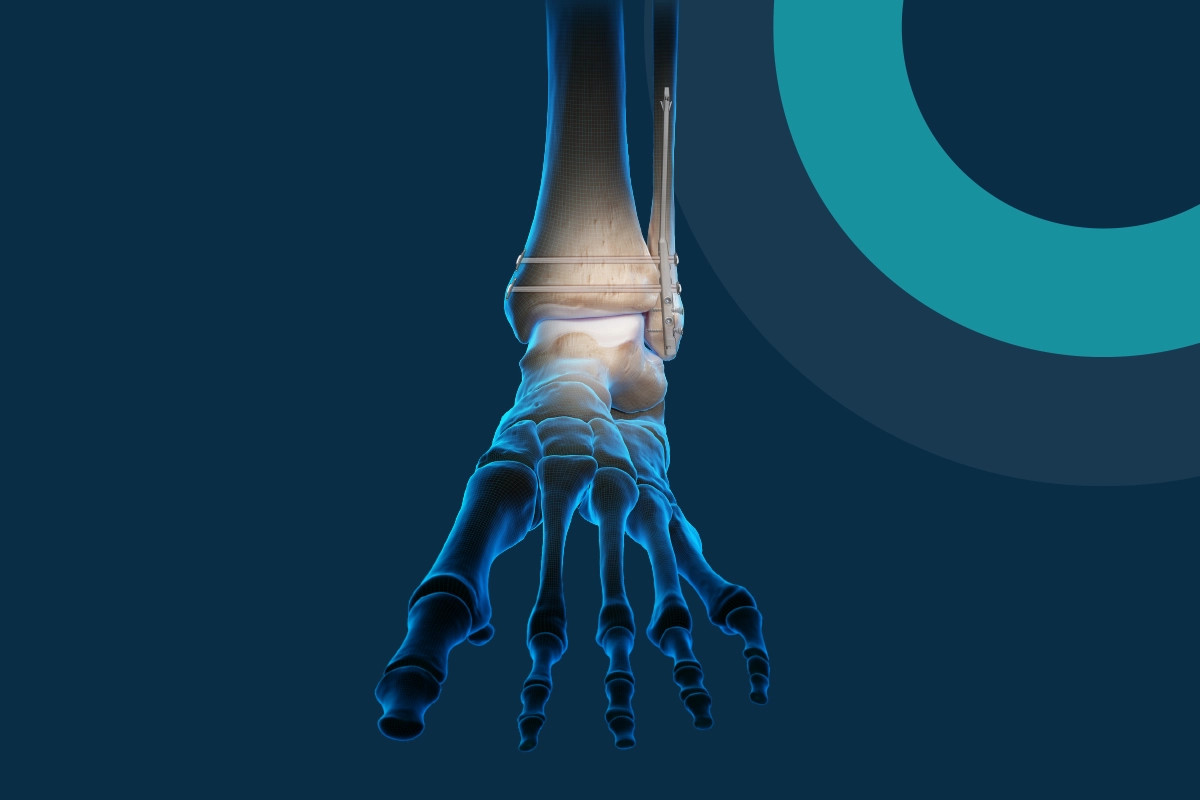
Micro Summary: This patient’s guide to modern ankle fracture surgery explains two lower-profile options, fibula nailing and TightRope fixation that can reduce hardware under the skin and support a smoother recovery. Download Dr. Neary’s Free Patient Guide.
Table of Contents
Ankle fracture surgery needs to be considered as you have the ankle looked at by a professional as soon as possible. A broken ankle is never just a simple break. It can involve bone, ligaments, or both! When the joint becomes unstable or the bones shift out of place, ankle fracture surgery is often required to restore proper alignment and hold everything steady while it heals.
Traditional surgery with large metal plates and rigid screws still works for many patients. However, it is no longer the only path. This patient’s guide to modern ankle fracture surgery explains two lower-profile techniques that many orthopaedic foot and ankle specialists now use: fibula nailing and TightRope fixation.
Fibula Nailing
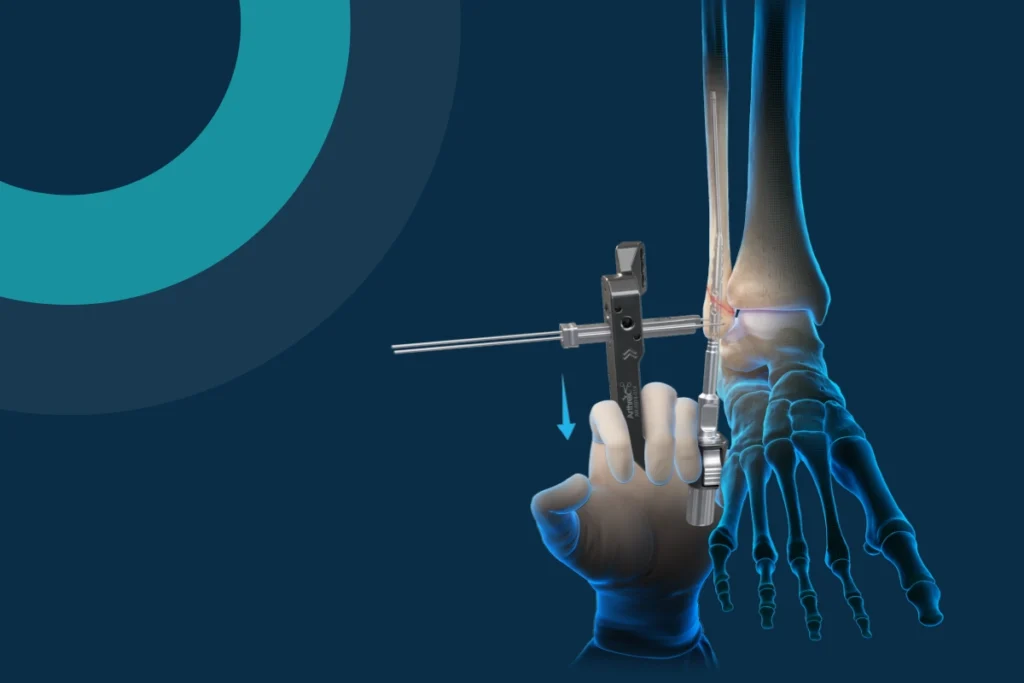
The fibula (the smaller bone on the outside of the lower leg) is commonly fractured near the ankle. Instead of a longer incision and a plate on the surface of the bone, a slender metal nail can be placed inside the fibula through a smaller incision. Locking screws hold the nail and the fracture in alignment. Because most of the implant is buried inside the bone, there is often less prominent hardware under the skin.
Across seven randomized studies involving 586 adults, fibula nails and plates produced similar healing and functional results. Some designs also showed fewer wound infections, though careful patient selection remains essential. Not every fracture pattern is suitable for a nail.

TightRope Fixation for the Syndesmosis
Severe ankle fractures can tear the strong ligaments (the syndesmosis) that hold the tibia and fibula together just above the joint. Traditional ankle fracture surgery uses a rigid screw. TightRope is a suture-and-button device that stabilizes the bones while allowing a small amount of natural motion as the ligaments heal.
Pooled studies show lower risk of implant breakage compared with rigid screws, and routine removal is usually not required, reducing the chance of a second operation solely for hardware removal.

When both are used together in ankle fracture surgery.
Some injuries involve both a broken fibula and an unstable syndesmosis. In these cases the fibula nail can support the broken bone while TightRope stabilizes the ligaments. This combination keeps more of the hardware inside the bone or low-profile, which can be gentler on the soft tissues.
Your plan is personal.
No two ankle fractures are identical. Your surgeon will review your X-rays, examine the skin and swelling, test the stability of the ankle, and consider bone quality, activity level, medical conditions, and the exact fracture pattern before recommending a specific approach.
- Is my fibula fracture a good match for a nail?
- Is the syndesmosis injured or unstable?
- Could TightRope help me avoid a rigid screw that might need later removal?
- When can I start motion, put weight on the ankle, and return to work or sports?
- What risks and alternatives apply specifically to my injury?
Download the full patient guide
The complete illustrated guide includes more detail on both techniques, research summaries, and the full checklist of questions to bring to your consultation.
Download Dr. Neary’s Free Patient GuideReady to discuss your specific injury?
Every ankle fracture is different. If you need a specialized evaluation or second opinion, the team at Catalyst Orthopaedics & Sports Medicine is here to help.
Dr. Kaitlin Neary is a fellowship-trained surgeon in Boise specializing in ankle fracture surgery at Catalyst Orthopaedics. She works alongside Dr. Tracye Lawyer and provide the most advanced sports medicine and orthopedic care available in Boise. To schedule a consultation, contact Catalyst Orthopaedics today.