

You twist your knee stepping off a trail, turn quickly on the pickleball court, or plant your foot during a soccer game.
It hurts.
But not badly enough to panic.
You can still walk. Maybe you even finish the game. A day or two later, the knee feels stiff. It swells after activity. Every now and then there is a click or catch when you stand up.
Now you are wondering whether you actually injured something or simply annoyed your knee.
A meniscus tear is one possibility, but knee pain can come from several different structures. The location of the pain, how the injury happened, whether the knee swells, and what it does when you move all help tell the story.
At Catalyst Orthopaedics & Sports Medicine in Boise, our goal is not to turn every sore knee into an MRI or every meniscus tear into surgery. It is to work out what is causing the problem, explain it clearly, and protect as much healthy knee tissue as possible.
First, what exactly is the meniscus?
Each knee has two menisci.
They are C-shaped pieces of fibrocartilage positioned between the thigh bone and shin bone. One sits on the inside of the knee, called the medial meniscus. The other sits on the outside, called the lateral meniscus.
People often hear the meniscus described as a shock absorber. That is true, but it undersells the job slightly.
The menisci help distribute load through the knee. They contribute to stability and help protect the articular cartilage covering the ends of the bones.
In other words, they are useful little pieces of engineering.
This is why modern meniscus treatment places so much emphasis on preservation. When a tear can be repaired and has a reasonable chance of healing, keeping functional meniscus tissue matters for the long-term health of the knee.
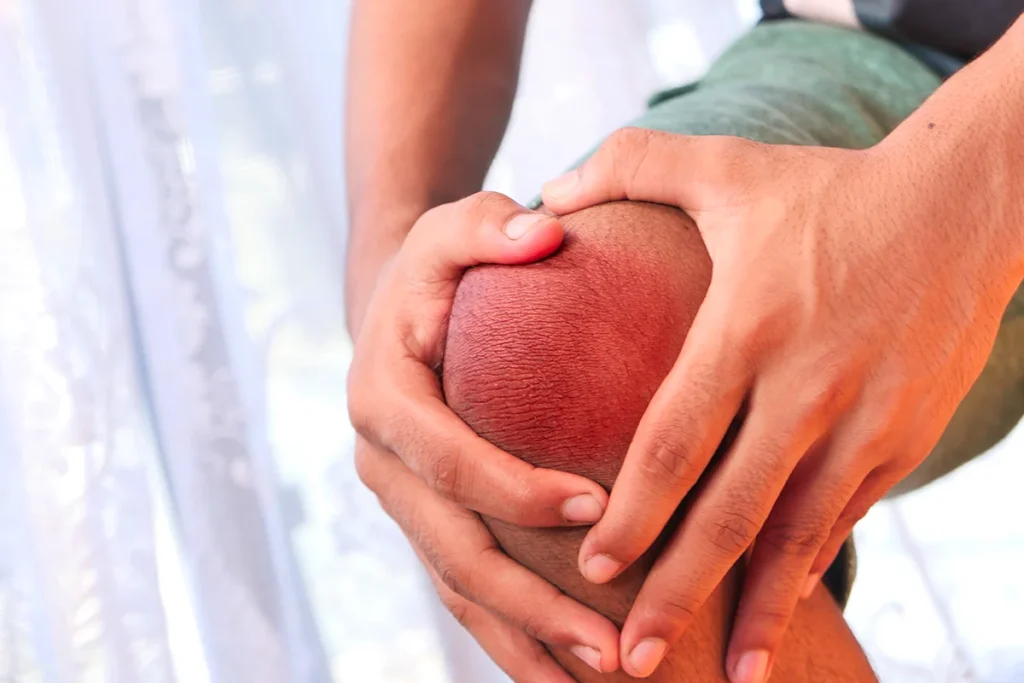
What does a meniscus tear feel like?
This is where things get slightly frustrating.
There is no single meniscus symptom.
Some people feel a sharp pain when the tear happens. Others feel a pop. Many people can still walk afterward, which is one reason meniscus injuries are sometimes ignored initially.
The knee may become stiffer and more swollen over the next few days.
Common symptoms include:
- Pain along the inside or outside joint line
- Swelling
- Stiffness
- Catching or clicking
- A feeling that something is moving inside the knee
- Trouble fully straightening the knee
- The knee giving way
- Pain with squatting or twisting
One clue we listen for is swelling that returns after activity.
A patient may say, “It feels pretty good in the morning, but every time I hike or play a game, the knee puffs up that evening.”
That tells us the joint is reacting to something.
It does not automatically prove there is a meniscus tear, but it deserves a closer look.
What does “catching” in the knee actually mean?
Patients use the word catching in different ways.
For one person, it means a painless click when standing from a chair.
For another, the knee briefly feels stuck and needs to be wiggled before it moves normally.
Those are not necessarily the same problem.
A torn piece of meniscus can sometimes move or become trapped between the joint surfaces. This can create painful catching or a true mechanical block.
A knee that is genuinely locked and cannot fully straighten needs prompt evaluation.
On the other hand, knees are noisy.
Clicking and popping can come from the kneecap, tendons moving over bone, changes in joint surfaces, or harmless gas movement within the joint. Noise by itself does not mean the meniscus is torn.
The questions are:
Does it hurt?
Does the knee swell?
Is motion blocked?
Is the problem becoming more frequent?
Context matters.
Meniscus tear or ordinary knee pain?
Not every painful knee has a torn meniscus.
Front-of-knee pain, particularly around the kneecap, may be related to patellofemoral pain. This often becomes noticeable with stairs, squatting, running, or sitting with the knee bent for a long time.
Arthritis can cause pain, stiffness, swelling, and occasional catching sensations.
Tendon irritation may hurt around the kneecap or at the back of the knee.
Ligament injuries can cause instability.
Cartilage injuries can create swelling and deep joint pain.
Even hip weakness and movement patterns can change the load through the knee enough to trigger symptoms.
This is why Googling “knee clicking” at midnight tends to produce seventeen possible diagnoses and very little peace of mind.
The pattern matters more than one symptom.
How meniscus tears happen
In younger athletes, a meniscus tear often follows a specific injury.
The foot stays planted while the knee twists. This can happen during soccer, basketball, skiing, football, lacrosse, pickleball, or any activity involving quick changes of direction.
Meniscus injuries can also occur alongside an ACL tear.
In adults, the story may be less dramatic.
The meniscus changes over time and can become more vulnerable to tearing. A relatively ordinary movement, such as standing from a low squat or twisting while carrying something, may be enough to trigger symptoms.
This does not mean the injury is imaginary or “just age.”
It means the treatment conversation may be different.
A traumatic tear in a 17-year-old soccer player and a degenerative meniscus tear in a 62-year-old hiker are both real knee problems. They do not automatically need the same solution.
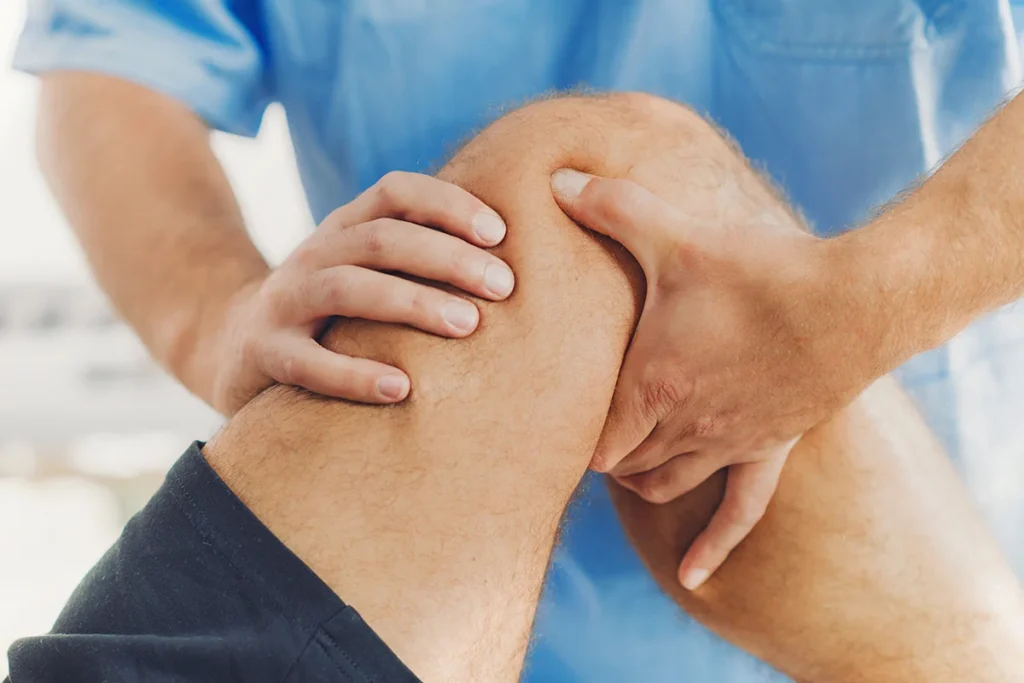
How do we diagnose a meniscus tear?
The first step is listening to what happened.
Was there a twist?
Did the knee swell immediately or gradually?
Where does it hurt?
Does it lock?
Can you fully straighten it?
Does it give way?
What activity are you trying to return to?
A physical examination then looks at motion, swelling, joint-line tenderness, stability, and how the knee responds to specific movements.
X-rays do not show the meniscus itself, but they are useful for looking at the bones, joint alignment, and arthritis.
An MRI can show the meniscus and other soft tissues in greater detail. It is particularly useful when the diagnosis is unclear, symptoms suggest a repairable tear, or there may be another injury such as ACL or cartilage damage.
But an MRI is not the patient.
A scan may show a meniscus tear in someone whose pain is actually coming from arthritis or another structure.
We treat the person, the symptoms, and the knee in front of us. The MRI helps complete the picture.
Does every meniscus tear need surgery?
No.
This is one of the most important things patients should know.
Some meniscus tears can improve with physical therapy, activity changes, and time.
Treatment depends on the type and location of the tear, blood supply, symptoms, age, activity goals, and the health of the rest of the knee.
A patient with a small tear, good motion, no locking, and steadily improving symptoms may do very well without surgery.
Physical therapy can help restore strength, improve movement control, and reduce stress through the knee.
Injections may have a role when arthritis or inflammation contributes to symptoms, although an injection does not stitch a torn meniscus back together.
The goal is to match the treatment to the actual problem.
There is little value in operating on an MRI finding that is not causing the patient’s symptoms.
When might meniscus surgery be considered?
Surgery becomes a more serious consideration when symptoms persist despite appropriate non-surgical care or the tear has characteristics that make mechanical problems or further damage more concerning.
Examples include:
- A knee that locks
- A displaced meniscus tear
- Persistent painful catching
- Repeated swelling
- A repairable traumatic tear in an active patient
- A meniscus injury associated with ACL damage
- Symptoms that continue to limit sport, work, or daily activity
- Certain meniscus root tears
The exact plan depends on the tear.
And this is where the words “meniscus surgery” become far too broad.
There is a big difference between repairing the meniscus and removing part of it.
Meniscus repair vs trimming the meniscus
Imagine tearing the sleeve of a jacket.
One option is to stitch the tear.
The other is to cut away the damaged section.
That is a very simple analogy, but it gets us close.
Meniscus repair
During a meniscus repair, the torn tissue is brought back together and secured so it has a chance to heal.
Not every tear can be repaired.
The location matters because some parts of the meniscus have a better blood supply than others. The tear pattern, tissue quality, age of the injury, and overall knee stability also affect the decision.
Repair usually means a slower early recovery because the tissue needs protection while it heals.
That extra patience can be worth it when preserving functional meniscus tissue is possible.
Partial meniscectomy, or trimming
Sometimes a tear cannot be reliably repaired.
The tissue may be badly damaged, located in an area with poor healing potential, or causing symptoms because an unstable piece is moving inside the knee.
In selected cases, the damaged portion can be trimmed while preserving as much healthy meniscus as possible.
Early recovery after a trim is often faster than after a repair.
But faster is not always better.
Removing meniscus tissue changes how load moves through the knee. This is why the modern goal is not simply to “clean out” every torn meniscus.
Preservation matters.

Why preserving the meniscus matters for cartilage
Cartilage and meniscus health are closely connected.
The meniscus helps spread force across the knee joint. When functional meniscus tissue is lost, more stress can be transferred to the articular cartilage.
Over time, this can contribute to joint wear.
This does not mean everyone who has part of a meniscus removed will develop severe arthritis.
It means the amount of healthy tissue we preserve matters.
At Catalyst, meniscus treatment often sits within a bigger joint-preservation conversation.
We are not only asking how to settle today’s knee pain.
We are asking what gives the knee the best chance of functioning well years from now.
What is a meniscus transplant?
This is a much more specialist conversation and does not apply to most people with a new meniscus tear.
Meniscal allograft transplantation may be considered in selected patients who have previously lost a significant amount of meniscus tissue and now have persistent compartment-specific knee pain.
A donor meniscus is transplanted into the knee to help restore some of the load-distributing function that was lost.
Patient selection is important.
The condition of the cartilage, knee alignment, ligament stability, age, and activity goals all matter.
A meniscus transplant is not a simple replacement for every removed meniscus, and it is not a shortcut back to sport.
For the right patient, however, it can form part of a broader joint-preservation strategy.
Dr. Tracye Lawyer, a partner at Catalyst, has a specialist clinical focus that includes meniscal repair and allograft transplantation, alongside ACL surgery and cartilage preservation.
How long is recovery after a meniscus injury?
It depends heavily on what was treated.
Someone completing non-surgical rehabilitation may progress as pain, swelling, strength, and movement improve.
Recovery after a partial meniscectomy is often quicker because there is no repair that needs to heal.
A meniscus repair takes longer.
The early phase may include restrictions on weight bearing or knee motion, depending on the tear and repair. Strength and movement are then built gradually.
Many patients ask for a date when they can return to sport.
We prefer milestones.
Is the knee swollen?
Do you have full motion?
Has strength returned?
Can you control a single-leg movement?
Can you run, stop, turn, and react without pain or compensation?
The calendar is useful. The knee is more useful.
What if the meniscus tear happened with an ACL injury?
ACL and meniscus injuries often travel together.
When the ACL is torn, the knee may lose stability. That instability can place the meniscus and cartilage at risk, particularly if the knee continues to give way.
If an ACL reconstruction is planned and a repairable meniscus tear is present, both injuries may be treated during the same surgery.
The rehabilitation plan may then be adjusted to protect the meniscus repair.
Catalyst has a detailed guide to ACL reconstruction and return to sport in Boise for patients dealing with a combined knee injury.
Again, the bigger picture matters.
Fixing the ligament while ignoring the meniscus would miss part of the problem.
A fairly typical meniscus story
A 39-year-old recreational skier catches an edge and twists her knee.
She feels pain but skis carefully back to the lodge.
The next morning, the knee is swollen and stiff.
Over the following two weeks, walking improves. She assumes the injury is settling.
Then she squats to pick something up and feels a sharp pain along the inside of the knee.
After that, the knee begins catching.
This is usually the point where patients arrive frustrated.
They thought it was getting better.
During the evaluation, we look at the injury pattern, the location of the pain, joint-line tenderness, swelling, stability, and motion. Imaging may confirm a meniscus tear.
But the MRI is only part of the decision.
Can the tear heal?
Is it displaced?
Is the knee locking?
What does the cartilage look like?
What does this patient want to return to?
The answer might be physical therapy.
It might be a meniscus repair.
It might be another treatment entirely.
The value is in knowing why.
When should knee pain be checked?
You do not need an orthopaedic appointment every time your knee aches after a long hike.
But certain symptoms deserve attention.
Schedule an evaluation if:
- Your knee swelled after a twist or sports injury
- Swelling keeps returning after activity
- The knee catches painfully
- You cannot fully straighten the knee
- The knee locks
- It feels unstable or gives way
- Pain is focused along the joint line
- Symptoms are not improving with sensible rest
- Knee pain is stopping you from working, training, hiking, skiing, or playing sport
A locked knee should be assessed promptly.
And remember, seeing an orthopaedic surgeon does not mean you have agreed to surgery.
Sometimes the most useful outcome of an appointment is finding out that you do not need it.
Meniscus and knee care at Catalyst Orthopaedics in Boise
At Catalyst Orthopaedics & Sports Medicine, we treat knee injuries across the full spectrum.
That includes meniscus tears, ACL injuries, cartilage damage, patellar instability, arthritis, and complex knee problems that may involve more than one structure.
Our approach starts with diagnosis.
From there, we consider the simplest treatment that has a reasonable chance of getting you back to the life you want.
For some patients, that means rehabilitation.
For others, an injection may help manage symptoms from another part of the knee.
When surgery is appropriate, minimally invasive knee arthroscopy may be used to repair or treat meniscus injuries.
And in more complex joint-preservation cases, the conversation may include cartilage restoration or meniscal transplantation.
You can explore Catalyst’s knee and lower-leg orthopaedic services to learn more about our approach.
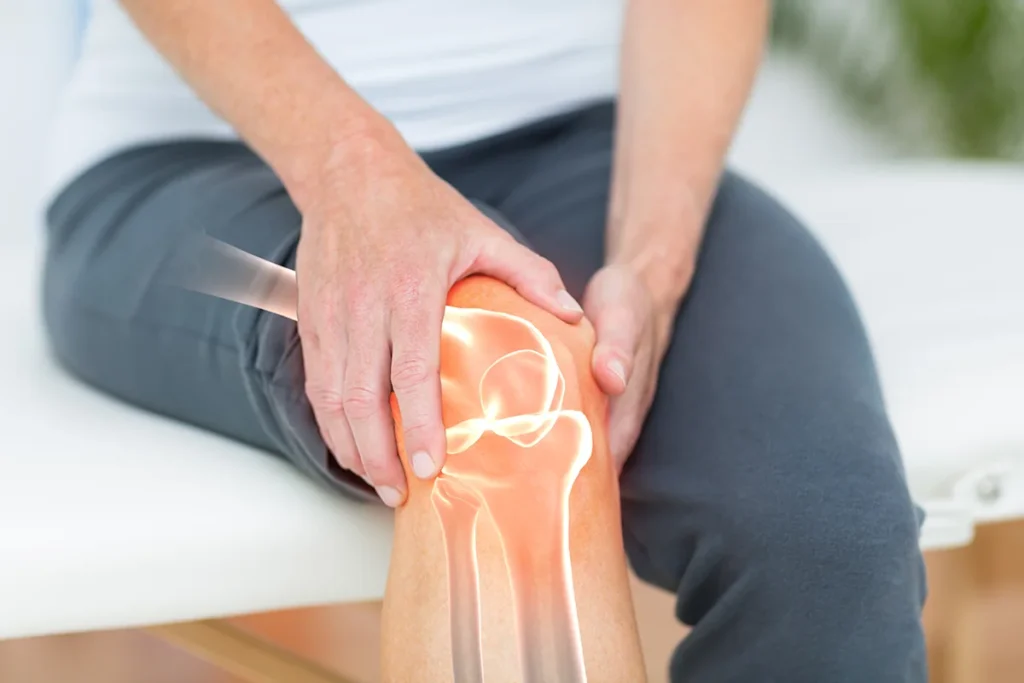
Is it a meniscus tear or just knee pain?
Sometimes the answer is obvious.
Often, it is not.
Pain alone cannot tell you whether the meniscus is torn. Neither can a click. Even an MRI finding needs to be understood alongside your symptoms and examination.
But a knee that repeatedly swells, catches, locks, or gives way is trying to tell you something.
You do not have to diagnose it yourself.
If knee pain is keeping you off the trails, slopes, court, field, or simply making everyday movement harder, schedule an evaluation with Catalyst Orthopaedics & Sports Medicine in Boise.
We will help you work out what is hurting, what can heal without surgery, and when preserving or repairing the meniscus may be the better long-term choice.
For independent patient information on meniscus tears, symptoms, and treatment options, the American Academy of Orthopaedic Surgeons provides a detailed meniscus guide through OrthoInfo.
FAQs
Can you walk with a torn meniscus?
Yes. Many people can still walk with a meniscus tear, particularly soon after the injury. The knee may become more swollen and stiff over the following days. Being able to walk does not rule out a tear.
Does a clicking knee mean I have a torn meniscus?
No. Knees can click for several reasons. Painful catching, repeated swelling, locking, or loss of motion are more concerning than painless noise alone.
Will a meniscus tear heal without surgery?
Some meniscus tears can improve without surgery. Healing potential depends on the tear’s location, pattern, blood supply, tissue quality, and the patient’s symptoms. Physical therapy may be appropriate for many patients.
What is the difference between meniscus repair and meniscus removal?
A meniscus repair stitches torn tissue together so it has a chance to heal. A partial meniscectomy removes an unstable or damaged portion of the meniscus. When surgery is needed, preserving as much healthy meniscus as possible is generally preferred.
How do I know if my meniscus tear needs surgery?
Persistent locking, painful catching, repeated swelling, a displaced tear, or symptoms that continue to limit activity may lead to a surgical discussion. The tear pattern, age, activity goals, and overall health of the knee also matter.
What happens if a torn meniscus is left untreated?
The answer depends on the tear. Some tears become less symptomatic with rehabilitation. Others may continue to cause pain, swelling, or mechanical symptoms. An unstable knee or displaced tear can need more specific treatment.
When should I see an orthopaedic surgeon for knee pain?
Seek an evaluation after a twisting injury with swelling, if the knee locks or repeatedly gives way, or when pain and swelling are not improving. A knee that cannot fully straighten should be assessed.