

PRP vs Stem Cells for Exosomes for joint pain, which is best? PRP may help some carefully selected patients with tendon pain or mild-to-moderate joint arthritis. Stem cell and exosome injections are still surrounded by far more marketing than proof, and many products advertised for joint pain are not FDA-approved for orthopaedic conditions.
A confusing topic with real consequences
If you have knee, shoulder, hip, ankle, or tendon pain, you have probably seen ads for “regenerative medicine.” The language is tempting. Clinics may promise to repair cartilage, avoid surgery, or get you back to sport with a quick injection.
The problem is that the words often get mixed together.
PRP, stem cells, exosomes, amniotic products, umbilical cord products, and “orthobiologics” are sometimes advertised as though they all do the same thing. They do not. Some use your own blood. Some come from donor tissue. Some contain cells. Some do not. Some are being studied seriously. Others are being sold faster than the evidence can support.
At Catalyst Orthopaedics & Sports Medicine, we think patients deserve plain answers. Not fear. Not hype. Not a cash package built around a buzzword.
What is PRP?
PRP stands for platelet-rich plasma.
It is made from a sample of your own blood. The blood is spun in a centrifuge to concentrate platelets and growth factors, then the prepared plasma is injected into the painful area. In orthopaedics, PRP is most often discussed for tendon problems, certain ligament injuries, and mild-to-moderate arthritis in selected patients.
This is the important part: PRP is not magic glue. It does not rebuild an entire joint surface. It does not make a torn ACL stable again. It does not turn severe arthritis into a normal knee.
But in the right setting, it may help reduce symptoms and support healing. That is why PRP is worth discussing carefully, especially when the diagnosis is clear and the patient understands the goal.
The American Academy of Orthopaedic Surgeons notes that research is still developing, but some evidence supports PRP for certain chronic tendon problems and low-to-moderate knee osteoarthritis. It also notes that PRP results can vary depending on the area being treated, the patient’s health, whether the injury is acute or chronic, and how the PRP is prepared.
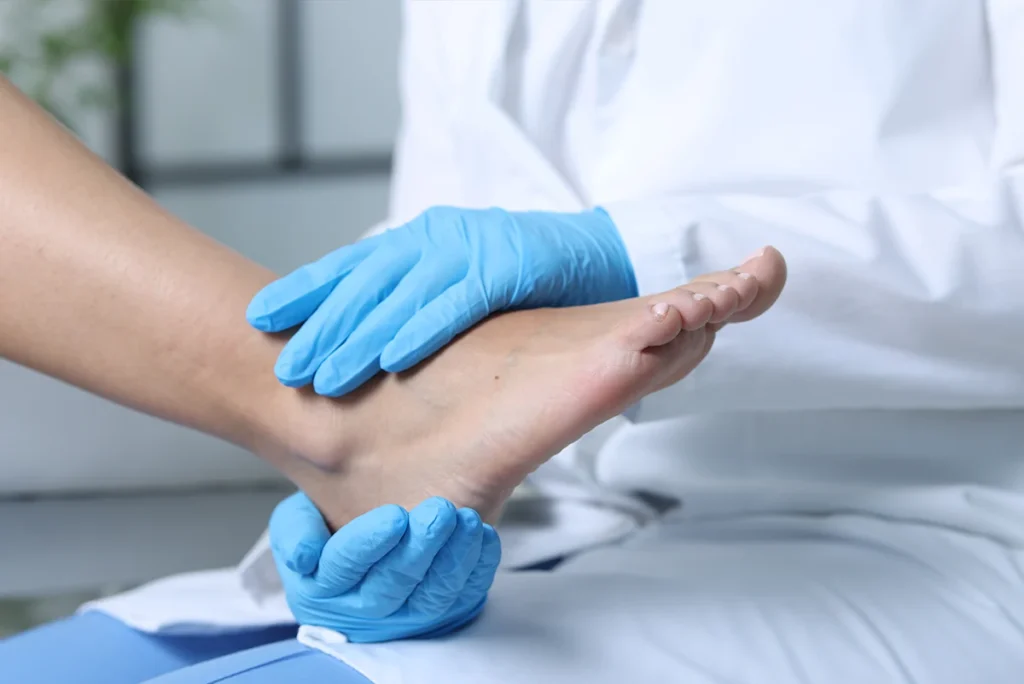
Where PRP can make sense
PRP is most reasonable when it is part of a bigger plan.
That plan usually includes a proper diagnosis, imaging when needed, activity modification, strengthening, and a clear timeline for reassessment. For some patients, PRP may be considered when rest, therapy, and load management have not been enough, but the problem is not yet at the point where surgery is clearly the best option.
This is similar to how Dr. Lawyer’s existing PRP page frames it: useful in selected cases, often for chronic tendon issues, some mild-to-moderate joint problems, and certain ligament injuries, but not a cure-all or a substitute for surgery when there is a clear mechanical problem.
A good PRP conversation should include:
- what condition is being treated
- why PRP is being considered
- what other options exist
- what improvement would count as success
- how long it may take to judge the result
- what it will cost
- what happens if it does not help
That last point matters. Any injection plan should have an exit ramp, not an endless subscription.
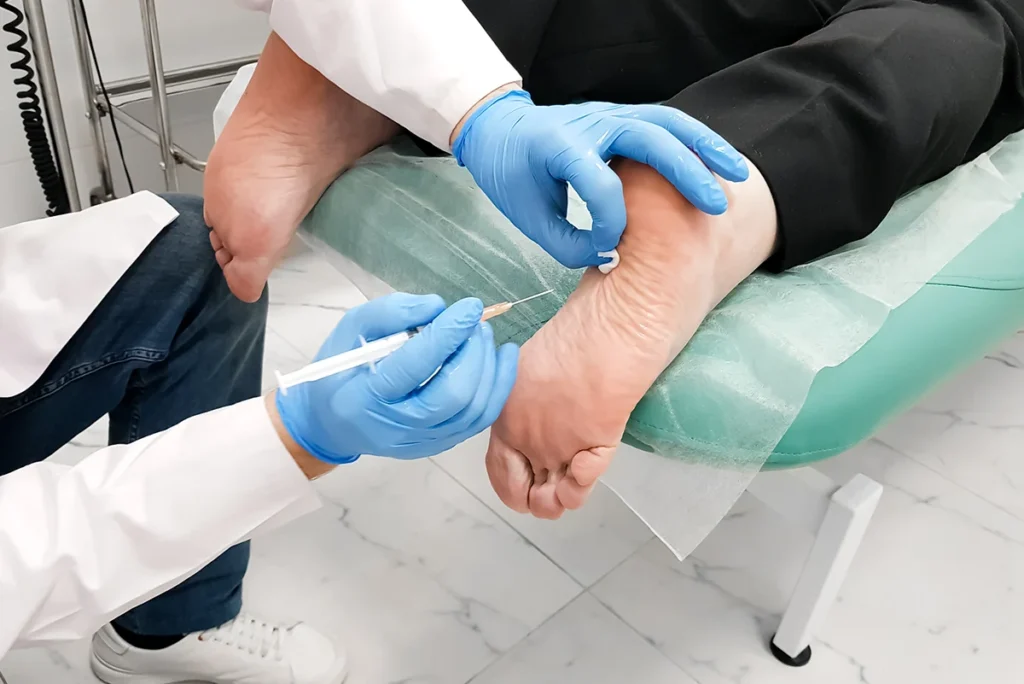
What are “stem cell” injections?
Stem cells are cells with the potential to develop into different tissue types. In theory, that sounds perfect for orthopaedics. Cartilage, tendons, ligaments, bone, and muscle are all tissues we would love to repair better.
The science is exciting. The marketing is often far ahead of it.
Many injections sold to patients as “stem cell” treatments are not simple, proven cartilage-regrowth treatments. Some are made from bone marrow or fat. Others are advertised as amniotic fluid, Wharton’s jelly, umbilical cord products, or donor-derived regenerative products. Patients may be told these products are natural, advanced, or “FDA registered.” That does not mean they are FDA-approved to treat joint pain.
The FDA states that regenerative medicine therapies, including stem cells, amniotic fluid, Wharton’s jelly, umbilical cord products, orthobiologics, and exosomes, have not been approved for the treatment of orthopaedic conditions such as osteoarthritis, tendonitis, back pain, hip pain, knee pain, neck pain, or shoulder pain.
That does not mean research should stop. It means patients should be careful before paying thousands of dollars for a treatment presented as proven when it is not.
What are exosomes?
Exosomes are tiny messenger particles released by cells. They are involved in cell-to-cell communication, and they are being studied in many areas of medicine.
But exosomes are not stem cells.
They do not contain living cells. They are not a shortcut around regulation. And they are not FDA-approved as a treatment for joint arthritis, tendon pain, or sports injuries.
This is where patients can be misled. When “stem cells” became more heavily questioned, some marketing shifted toward exosomes. The language changed, but the problem often stayed the same: big claims, high prices, limited clinical proof.
If a clinic says exosomes will regenerate cartilage, reverse arthritis, or help almost every condition they treat, that is a red flag.
What patients are often getting wrong
Most patients are not being careless. They are looking for hope. Joint pain affects work, sleep, sport, parenting, hiking, skiing, golf, cycling, and ordinary daily life. It is completely understandable to want an option that avoids surgery.
The common misunderstanding is thinking that “new” means better, or that “natural” means proven.
PRP is made from your own blood, but that does not mean it works for every problem. Stem cell science is promising, but that does not mean cash-pay injections can regrow a damaged joint. Exosomes sound advanced, but that does not mean they are approved or reliable.
The best question is not, “Is this regenerative?”
The better question is, “What exactly is my diagnosis, and what evidence supports this treatment for my specific condition?”

What professionals are still debating
Doctors and researchers are not all saying the same thing, especially about PRP.
Some sports medicine and orthopaedic specialists see PRP as a useful option for selected patients. Others are more cautious because studies use different PRP preparations, different injection schedules, and different patient groups. That makes results harder to compare.
Professional guidelines also differ. The American College of Rheumatology/Arthritis Foundation guideline includes therapies recommended against for osteoarthritis, while orthopaedic sources tend to describe PRP as promising but still evolving.
That disagreement is worth acknowledging. It does not mean everyone is confused. It means the details matter.
The same is true for stem cells. In research settings, there may be important future uses. In everyday consumer advertising, the claims are often much bigger than the proof.
What to watch out for
Be careful if you hear any of these promises:
- “This will regrow your cartilage.”
- “You can definitely avoid surgery.”
- “This works for knees, shoulders, hips, backs, ankles, and almost everything else.”
- “It is FDA registered,” without clear explanation of FDA approval for your condition.
- “You need to pay today to lock in pricing.”
- “We do not need imaging.”
- “There are no risks.”
- “This is better than surgery for everyone.”
Also be cautious with prepaid packages. A series of expensive injections may sound more complete, but more treatment is not automatically better treatment.
A trustworthy clinician should be willing to say, “This may not be right for you.”

A diagnosis-first approach
Joint pain is not one thing.
A painful knee may come from arthritis, a meniscus tear, a cartilage defect, ligament instability, kneecap tracking, tendon overload, or referred pain from somewhere else. Shoulder pain may come from bursitis, rotator cuff disease, arthritis, stiffness, instability, or a tear that needs a different plan altogether. Foot and ankle pain has its own long list of possibilities, from tendon disorders to cartilage injury, arthritis, fractures, deformity, or instability.
That is why the first step should not be choosing an injection.
The first step should be understanding the problem.
At Catalyst, the better pathway usually looks like this:
- Start with history and exam.
- Review imaging when needed.
- Match treatment to the diagnosis, not the trend.
- Use rehab, strengthening, bracing, activity changes, or injections when appropriate.
- Consider surgery when the structure of the joint makes non-operative care unlikely to succeed.
For some patients, PRP may fit into that pathway. For others, it may waste time and money. And for some, the honest answer is that surgery, cartilage restoration, tendon repair, or joint replacement may offer the more reliable path.
Where cartilage preservation fits
Cartilage preservation is different from promising that an injection can “regrow your knee.”
Cartilage preservation means looking carefully at the joint and asking whether there is a specific, treatable cartilage problem. In some patients, especially younger or active patients with focal cartilage damage, procedures such as cartilage restoration, osteochondral grafting, MACI, BioCartilage, or other advanced techniques may be considered.
Dr. Lawyer’s public cartilage-preservation content explains this distinction well: some patients have a focal defect, almost like a pothole in the joint surface, while others have more diffuse, advanced arthritis. Those are not the same problem, and they should not be treated as though they are.
This is where honest orthopaedic care matters. The goal is not to sell the newest word. The goal is to match the treatment to the joint in front of us.
What should you ask before paying for PRP, stem cells, or exosomes?
Before agreeing to any regenerative injection, ask:
- What exactly is being injected?
- Is it from my own body or donor tissue?
- Is it FDA-approved for my condition?
- What evidence supports it for my diagnosis?
- What are the risks?
- How many injections are being recommended, and why?
- What improvement should I expect, and by when?
- What happens if it does not work?
- Are there less expensive or better-proven options?
- Am I delaying a treatment that may be more appropriate?
If the answers feel vague, slow down.
The honest bottom line about PRP vs Stem Cells vs Exosomes for Joint Pain
PRP has a place in orthopaedic care for selected patients, especially when the diagnosis is clear and expectations are realistic.
Stem cells and exosomes remain more complicated. There is real science happening, but many direct-to-consumer treatments are being marketed beyond what the evidence and FDA approval status support.
Patients do not need hype. They need a clear diagnosis, a practical plan, and a surgeon who is willing to explain both the promise and the limits of treatment.
If you are considering PRP, stem cells, or exosomes for joint pain in Boise, Meridian, Nampa, or the greater Idaho region, the safest next step is not to buy the most expensive injection. It is to get an orthopaedic opinion that starts with your actual joint, your actual imaging, and your actual goals.
Disclaimer
This information is for general education and is not a substitute for medical advice. Every treatment has risks and trade-offs. Talk with your orthopaedic surgeon about your specific diagnosis, health history, imaging, and goals.
Meet Our Specialists
Dr. Kaitlin Neary is a fellowship-trained surgeon in Boise, working alongside Dr. Tracye Lawyer to provide Idaho athletes with the most advanced sports medicine and orthopedic care available. To schedule a consultation, contact Catalyst Orthopaedics today.

Frequently Asked Questions
Is PRP the same as stem cell therapy?
No. PRP uses concentrated platelets from your own blood. Stem cell treatments involve cells or cell-derived products, and the regulation, evidence, and risks are different.
Can PRP regrow cartilage?
Current evidence does not support PRP as a way to regrow an entire cartilage surface. It may help pain and function in some selected patients, especially with mild-to-moderate knee arthritis or certain tendon problems.
Are exosomes approved for joint pain?
No. Exosomes are not FDA-approved for orthopaedic conditions such as knee arthritis, shoulder pain, tendonitis, or sports injuries.
Are stem cell injections approved for arthritis?
The FDA states that regenerative medicine therapies have not been approved for orthopaedic conditions such as osteoarthritis, tendonitis, hip pain, knee pain, or shoulder pain.
When might PRP be worth considering?
PRP may be worth discussing for selected chronic tendon problems, certain mild-to-moderate joint problems, or specific injuries where conservative care has not been enough. It should be part of a broader treatment plan, not a stand-alone promise.
What is the biggest red flag?
A guarantee. Any clinic promising to regrow cartilage, cure arthritis, or help everyone avoid surgery should be treated with caution.
Updated May 2026 / Kaitlin C. Neary, MD, FAAOS is a fellowship-trained Orthopaedic foot and ankle surgeon at Catalyst Orthopaedics & Sports Medicine in Boise, Idaho.